
Clash Detection Services
Scope of Our
Model Aggregation and Setup
We bring together architectural, structural, and MEP models into a federated model, align coordinates and grids, and prepare views and sets for clash testing as per your scope.
Hard and Soft Clash Detection
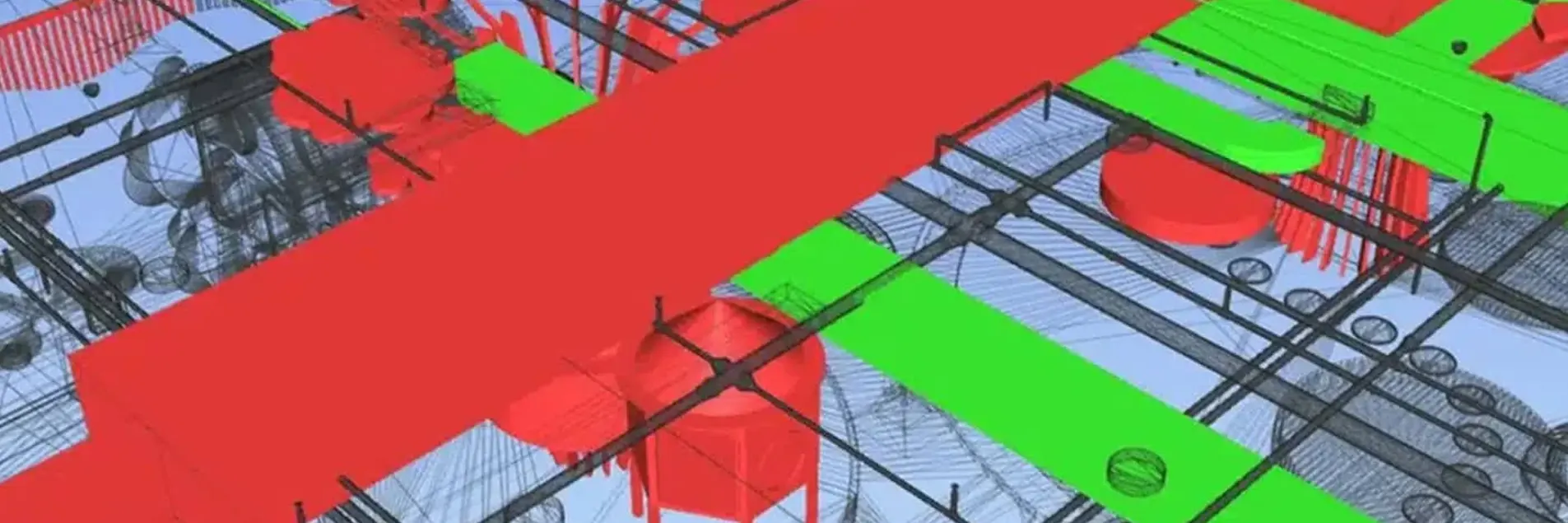
We run hard and soft clash tests using tools like Navisworks, Revit, and Revizto, checking intersections, clearances, and overlaps between building systems.
Rules and Tolerance Settings
We define clash rules and tolerances that reflect your project standards, so reports focus on meaningful issues instead of noise and minor overlaps.
Clash Grouping, Classification, and Prioritisation
We group clashes by trade, system, location, and severity, helping teams see which issues are critical, which can wait, and who needs to act.
Clash Reports and Dashboards
We provide clash reports, screenshots, and dashboards that show open clashes, resolved clashes, and overall progress over time for review meetings.
Design Review Support
We support design and coordination meetings by walking teams through the clash views, answering questions, and updating reports after each review.
Deliverables
- Federated model prepared for clash testing
- Clash test sets and saved views
- Clash reports with issue lists and descriptions
- Screenshots and viewpoint links for each clash group
- Dashboards showing counts, status, and trends
- Files in RVT, NWD, NWC, IFC, PDF, Excel as per scope
Each deliverable supports early issue detection, structured reviews, and faster resolution with less back and forth.
What Clash Detection Helps You Achieve
- See interference between systems before construction begins
- Improve coordination between architecture, structure, and MEP
- Reduce RFIs, change orders, and rework on site
- Give teams a shared, visual list of issues to resolve
- Build a safer and more predictable construction sequence
Trades and Systems Covered
Architectural layouts and openings
Structural frames, slabs, foundations, and cores
Mechanical systems including HVAC equipment and ductwork
Electrical systems including panels, risers, and cable trays
Plumbing and sanitary systems including risers and mains
Fire protection systems including sprinklers and mains
Clash Detection Workflow
Scope and input review
Review models, drawings, and scope notes. Confirm disciplines, file formats, and required outputs
Model alignment and setup
Align models to shared coordinates and grids. Create views, sets, and structure for clash tests.
Run clash tests
Run defined clash tests in Navisworks, Revit, or Revizto using agreed rules and tolerances.
Group and classify clashes
Group clashes by discipline, area, and severity. Tag responsibilities and suggested action.
Generate reports and dashboards
Prepare Excel reports, PDF summaries, screenshots, and dashboards for review meetings.
Review and update
Support review calls, update clash status after design changes, and issue revised reports if included in scope.
Why Choose Us
Focus on actionable clashes, not noise
Experience across architectural, structural, and MEP models
Clear, structured reports that teams understand quickly
Flexible engagement, from one-time checks to ongoing project support
Easy integration with your existing BIM and coordination process
Industries

Commercial

Residential

Healthcare

Education

Industrial

Hospitality

Retail

Data Centers
Architectural 3D Modeling Services in Texas & Across the USA
Benefits
Detect issues early instead of discovering them on site
Reduce the number of redesign cycles and coordination loops
Improve communication between design and construction teams
Gain confidence that the model has been thoroughly checked
FAQs for Clash Detection Services
We typically work with Revit models, Navisworks files, IFC files, or a mix of these formats, along with a clear scope of which trades to include.
Yes. We can combine RVT, NWD, NWC, and IFC files into a federated model for clash testing.
Clash detection focuses on identifying and reporting clashes. If you also need model updates and design changes, that is covered under BIM coordination services as a separate scope.
For active projects, it is usually run at key milestones or at a regular interval such as weekly or biweekly, depending on model updates.
We mainly use Autodesk Navisworks, Revit, and Revizto, plus Excel and PDF for reports and dashboards.
We share clash reports, screenshots, dashboards, and viewpoint files, and can join review meetings to walk teams through the results if required.